
How Clark May and his wife, Marcia, transformed a neglected building into a place of wonder—and discovered that big dreams can find a home in a small Oklahoma town.
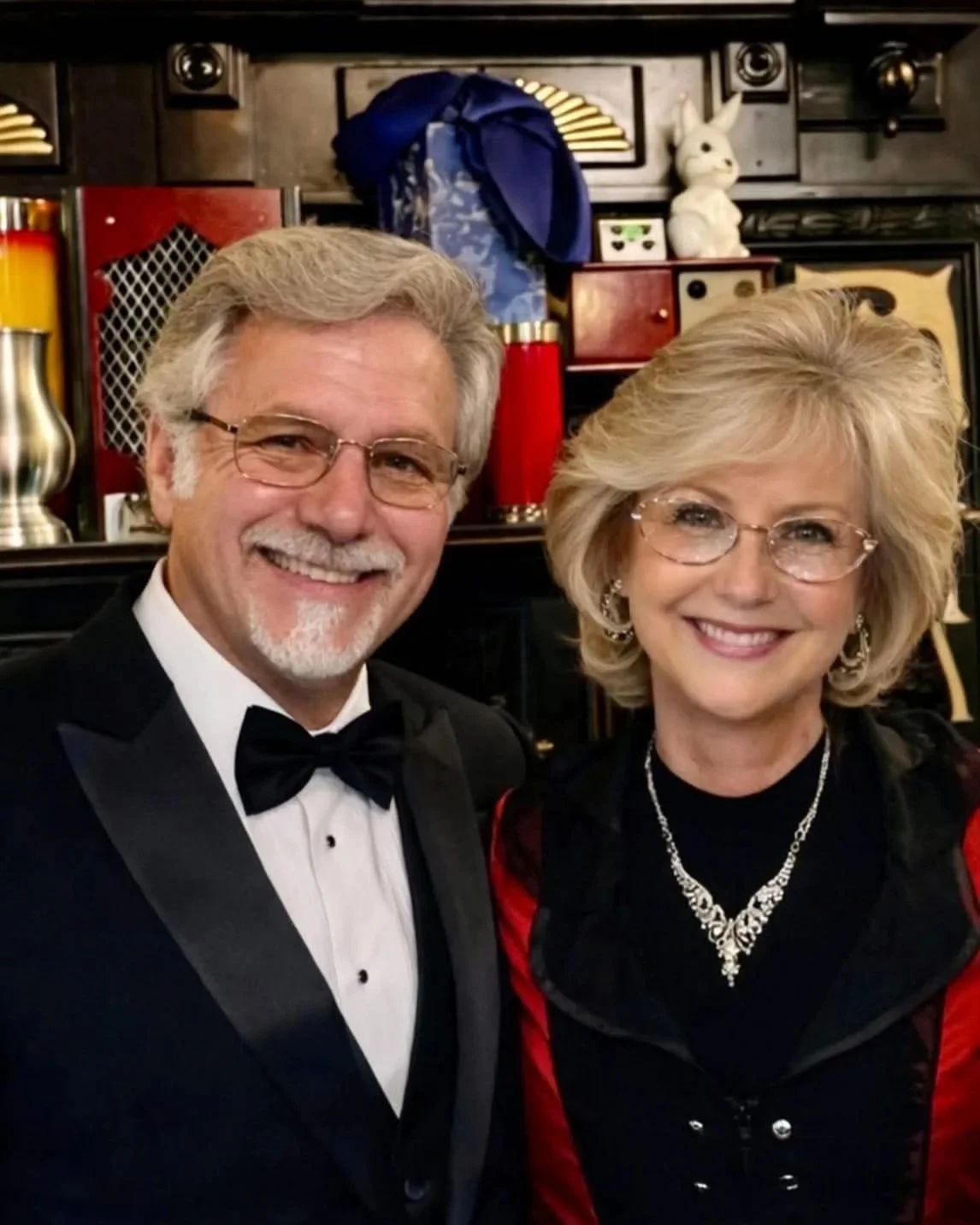
Clark and Marcia May
There’s a magician on Main Street. No, really.
And if you think magic shops belong in big cities, amusement parks, or the pages of a Harry Potter novel, you might want to take a little trip to Locust Grove, Oklahoma.
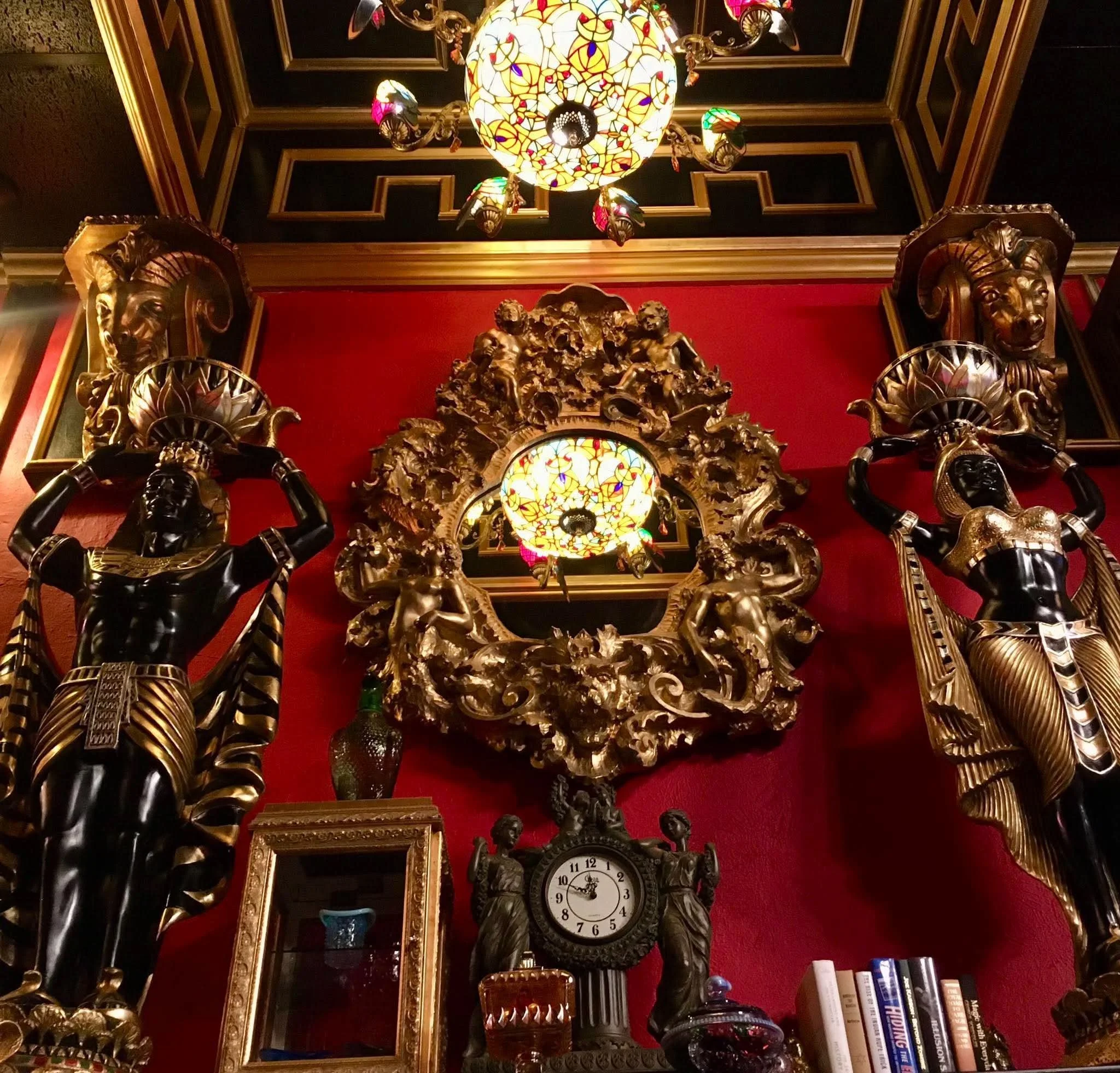
Ten years before Clark May and his wife, Marcia, opened their magic shop, they were already shopping for it. Not for buildings or equipment, but for antiques. A unique piece of furniture here, an interesting decorative item there. During their weekly outings, they would search for things that might someday belong in the magic shop they dreamed of creating.
They didn’t have a location, a theater, or any guarantees their idea would succeed. What they had was a vision, and piece by piece, they began preparing for it. They collected items, restored them, and found places to store them in their home, patiently waiting for the day those treasures would have a permanent place of their own.
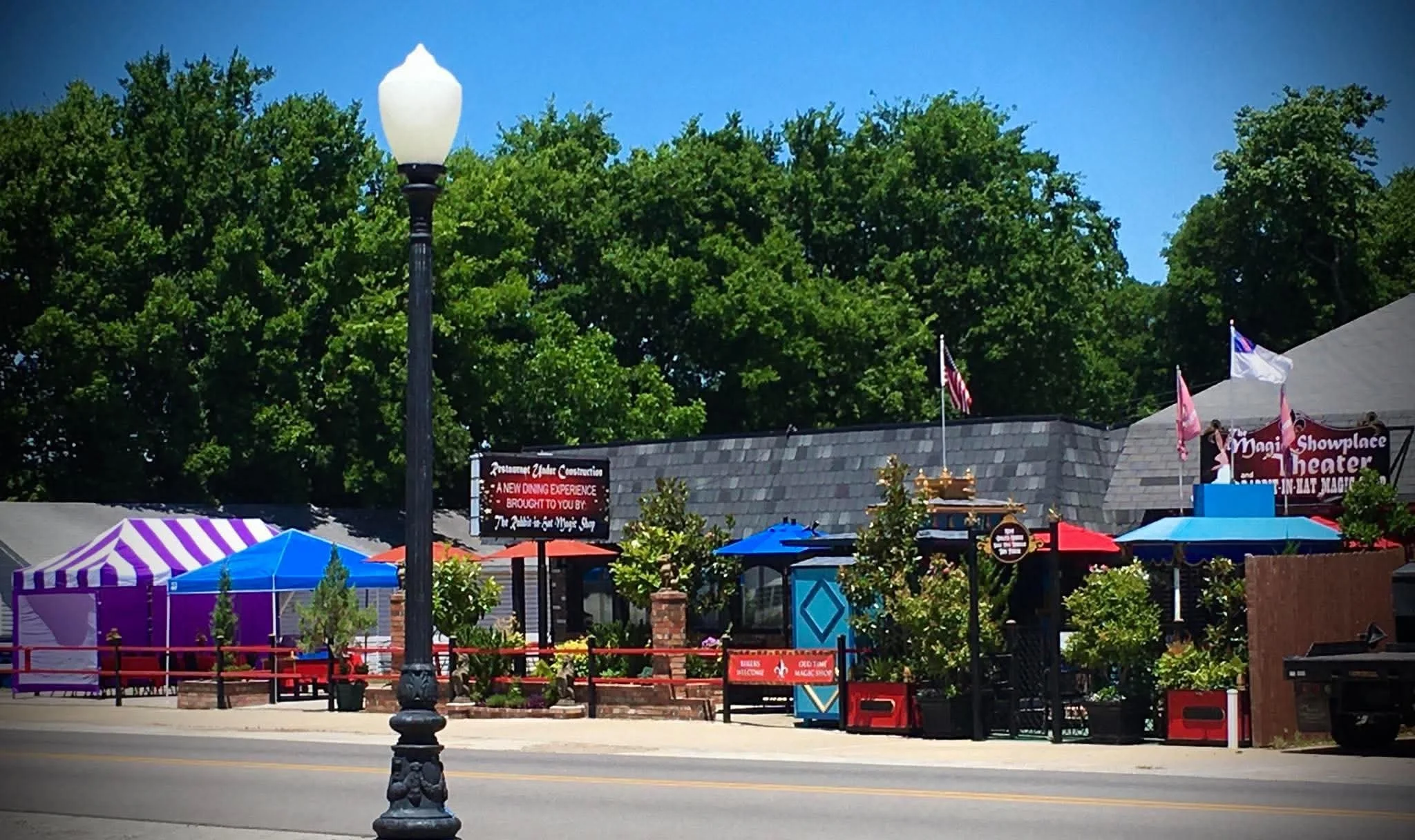
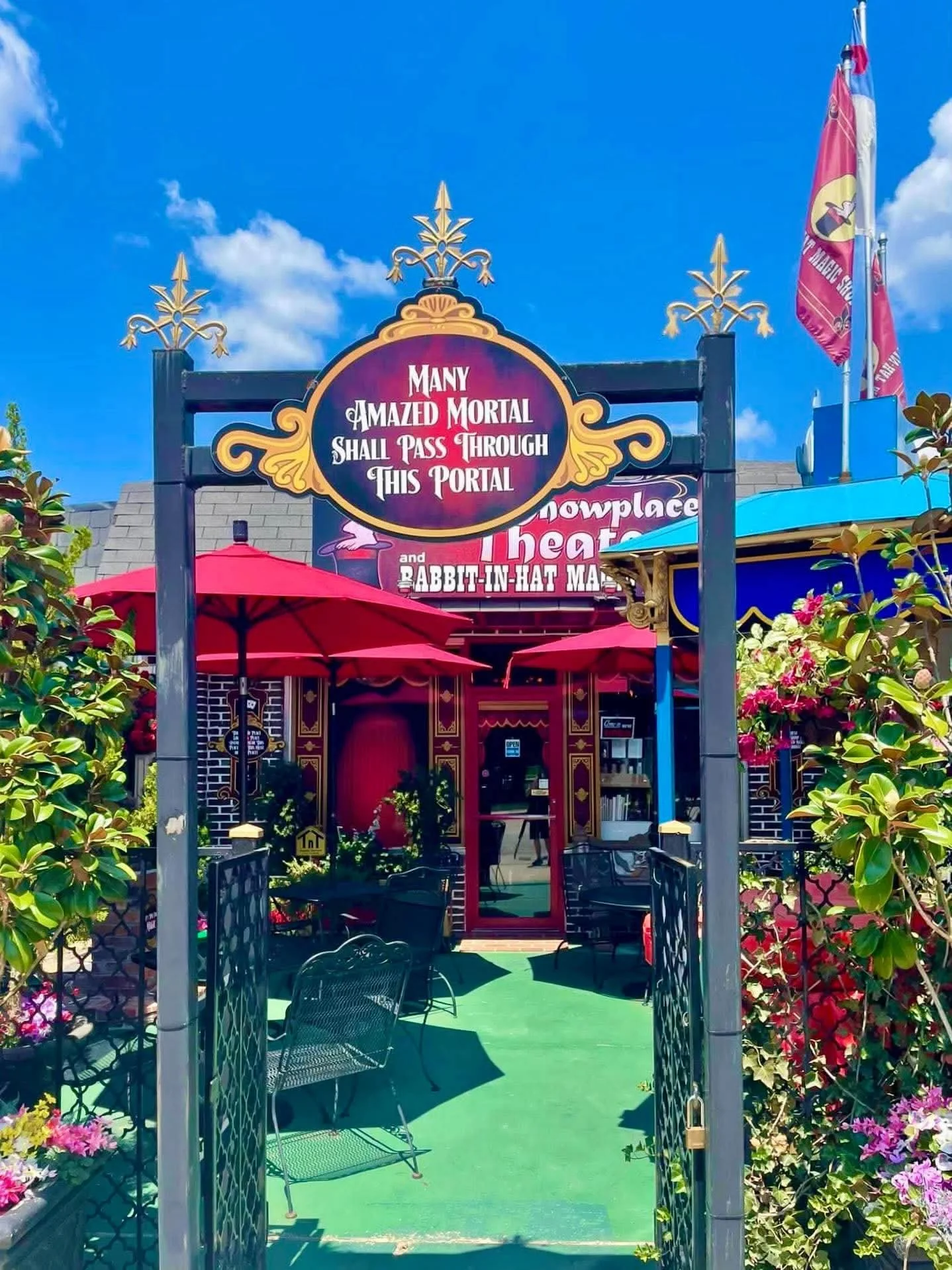
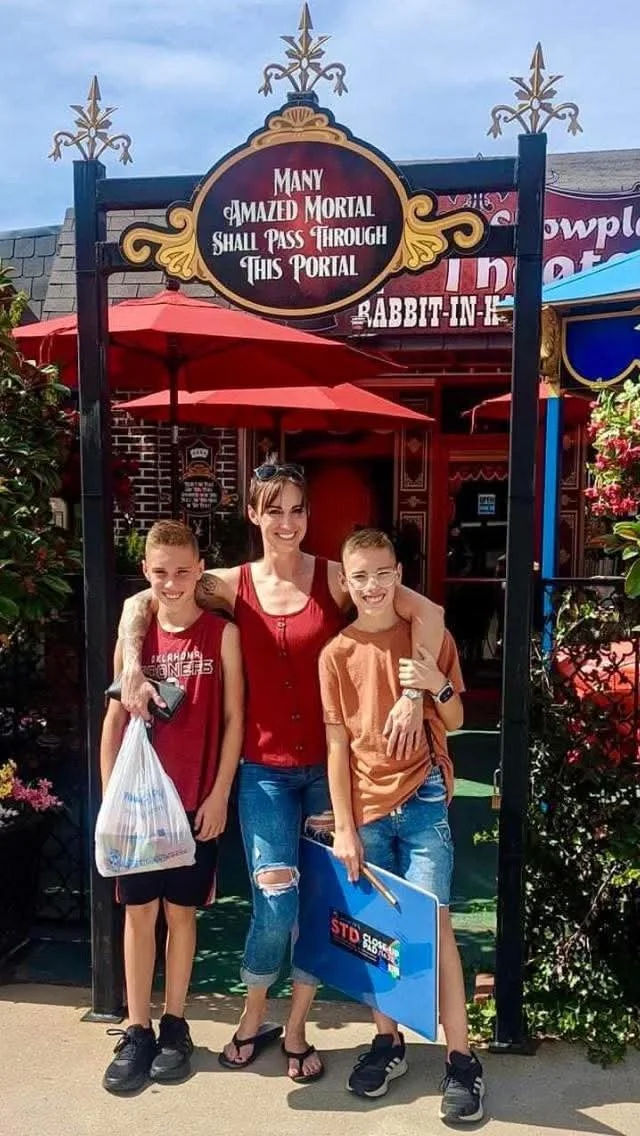
Today, tucked along Main Street in Locust Grove, Oklahoma, that vision has become something extraordinary. Step through the entrance of The Magic Showplace Theater & Rabbit-in-Hat Magic Shop, and you may find yourself wondering whether you’ve somehow left small-town Oklahoma behind.
But the most fascinating part of this place isn’t what happens on the magician’s stage. It’s the story of how it came to be, the determination behind its creation, and the couple who believed in something long before anyone else could see it.
Where the Magic Began
Clark’s fascination with magic began at nine years old when his parents gave him a magic set. Like most curious children, he was eager to figure out how everything worked, but this was long before YouTube tutorials and instant internet answers. Fortunately, he had someone willing to help him learn: his grandfather.
A bit of a magician himself, Clark’s grandfather helped him understand the tricks and even built him his first magic table, complete with a trap door. That childhood fascination never completely disappeared, although life eventually led Clark in another direction. He pursued a career in aviation, keeping magic as an occasional hobby and attending performances whenever an interesting magician came to town.
What he encountered, however, was mostly magic geared toward children. While entertaining in its own right, it wasn’t quite the kind of magic that captured his imagination.
That changed when he and Marcia visited the famous Magic Castle in Hollywood, an exclusive private club known for its remarkable atmosphere and sophisticated magic performances. There, Clark discovered an entirely different approach to the art. It wasn’t simply about making objects disappear or fooling an audience. It was an experience that combined entertainment, elegance, humor, and genuine amazement.
He was captivated. So much so that he told Marcia that when he retired, he wanted to bring something similar back to Oklahoma.
The dream was taking shape. Now they just needed somewhere to put it.
An Unexpected Place to Call Home
Tulsa was originally the couple’s first choice. With its larger population and established entertainment scene, it seemed a logical location for the kind of venue Clark envisioned. But finding affordable property proved difficult, particularly in desirable areas of the city. Clark also wasn’t interested in renting a space where a landlord’s decisions could eventually determine the future of their business.
His brother, a retired game warden, suggested they consider Locust Grove. The couple made the trip, looked around, and initially decided the town was simply too small to support the kind of entertainment business they wanted to create.
They continued searching elsewhere, but the right opportunity never appeared. Eventually, at his brother’s encouragement, they gave Locust Grove another look. This time, they found a property they could afford, although it came with a considerable amount of work.
The building had been in foreclosure, and while its brick and cinder-block structure was sound, the interior was another story. Cheap flooring had been secured with what Clark remembers as an almost impossibly strong adhesive, and the walls were painted an unfortunate shade of pink. Years of neglect had left the couple with more than a few unpleasant surprises.
Clark recalled the hours he and Marcia spent scraping, chipping, cleaning, and repairing. There were moments when they wondered what they had gotten themselves into.
I imagine most business owners can relate to that feeling. You begin with a vision of what something could become, picturing the finished product and the possibilities ahead. Then reality settles in. The repairs cost more than expected, projects take longer than planned, and the list of things that need attention seems to grow rather than shrink.
It’s often somewhere in those moments that the real test begins. Do you continue believing in what you started, or do you decide the dream simply isn’t worth the trouble?
Clark and Marcia kept going. Slowly, with patience, persistence, and a tremendous amount of hands-on work, the neglected building began to transform.
Fourteen years later, it’s difficult to imagine the place they first walked into.
Creating an Experience, One Detail at a Time
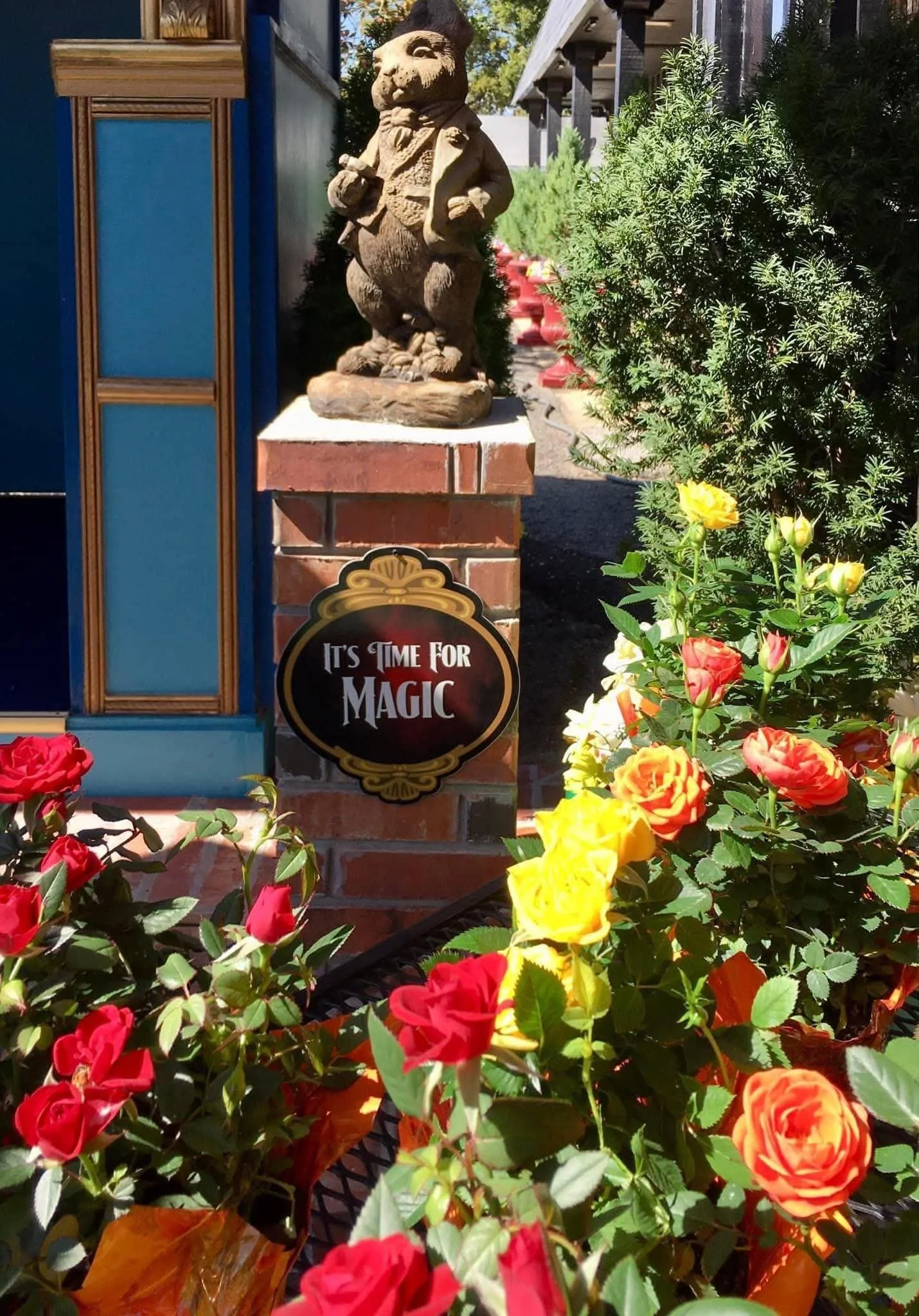
The transformation begins before visitors ever reach the magic shop. What was once a dusty parking lot is now the Enchanted Courtyard, an inviting outdoor space designed to make people feel as though they’re stepping away from the noise and demands of everyday life.
There are fountains, decorative features, seating areas, and a parlor stage for outdoor entertainment. The sound of flowing water helps soften the traffic noise from the street, while a motion-activated sound box adds another unexpected detail: birdsong.
During my visit, I actually found myself looking around for the birds before Clark revealed where the sound was coming from. I suppose I should have expected a magician to have a few surprises tucked away.
Clark explained that the atmosphere is intentional. He and Marcia wanted visitors to begin experiencing something different from the moment they entered the courtyard. By the time guests reach the shop, the outside world has started to fade, replaced by curiosity and anticipation.
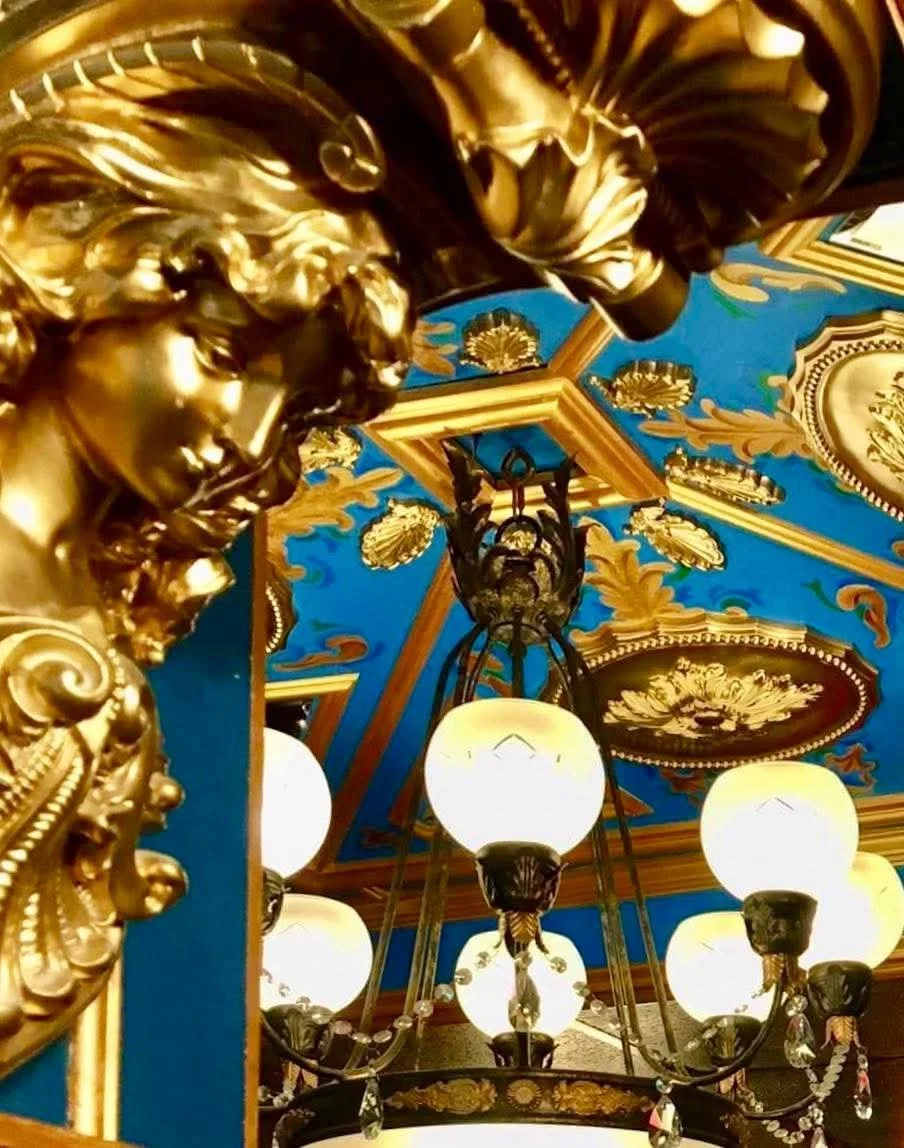
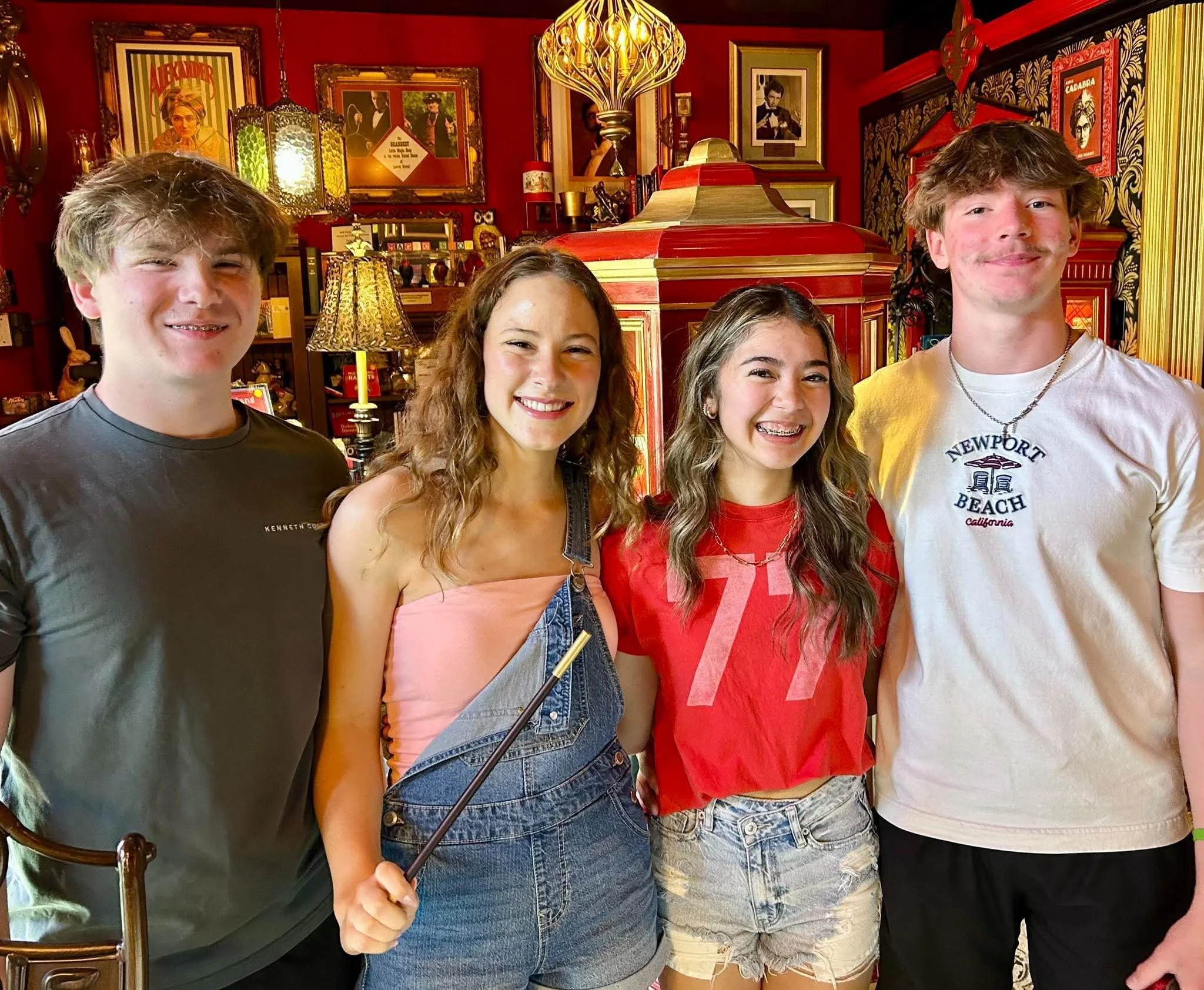
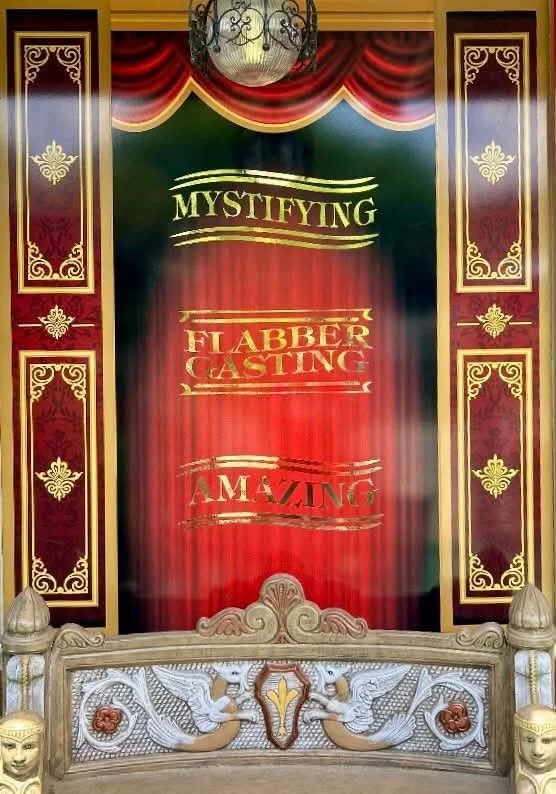
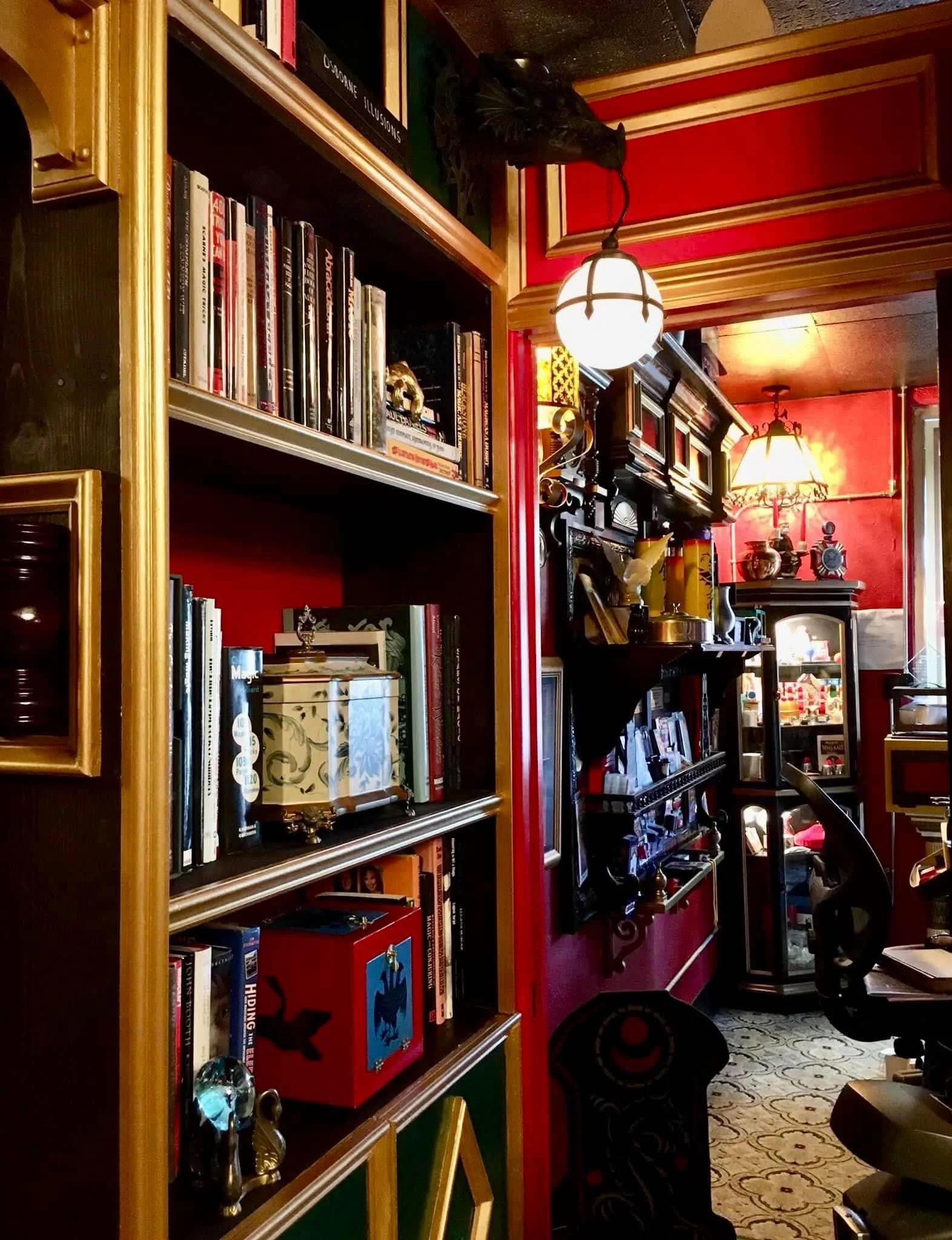
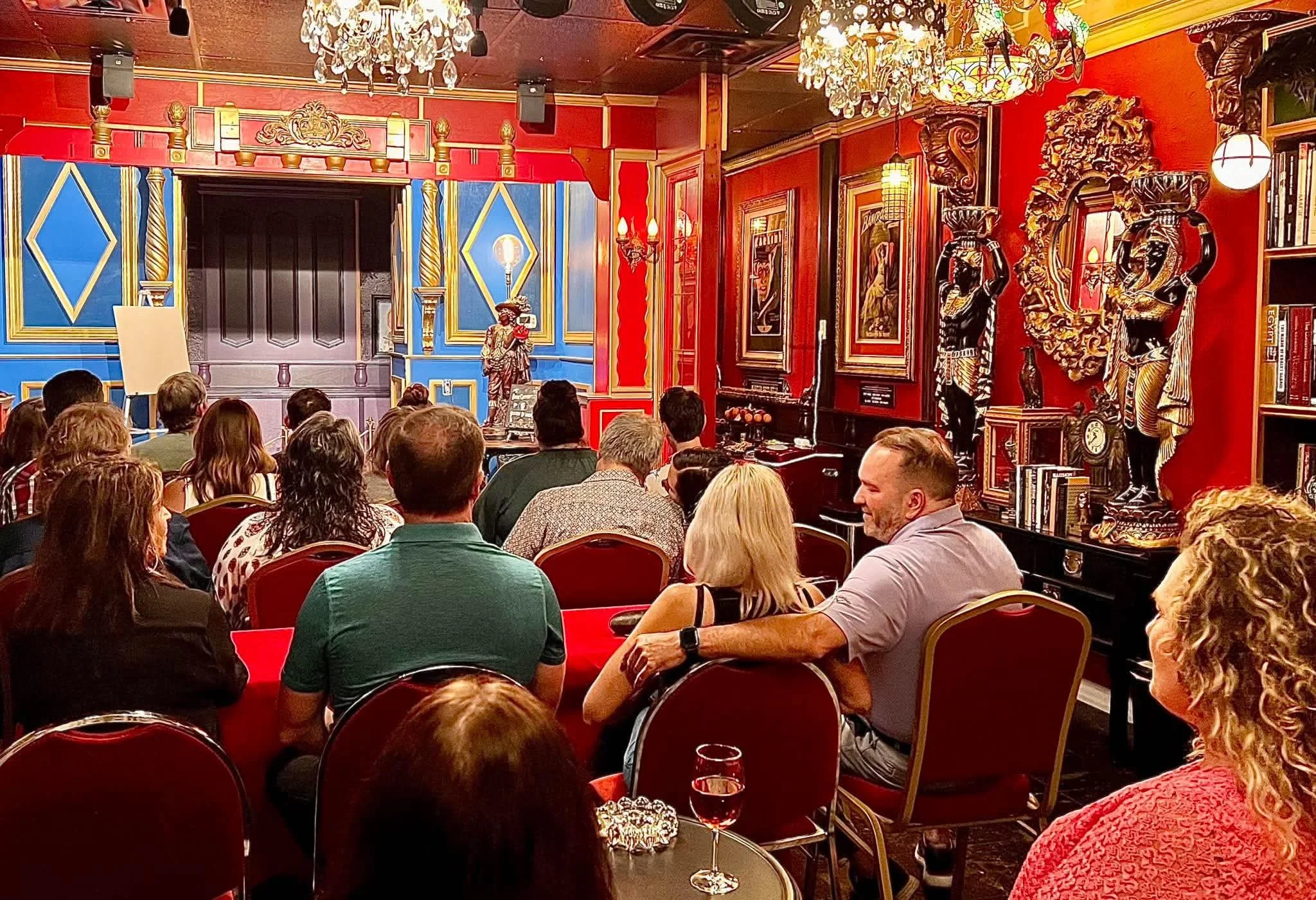
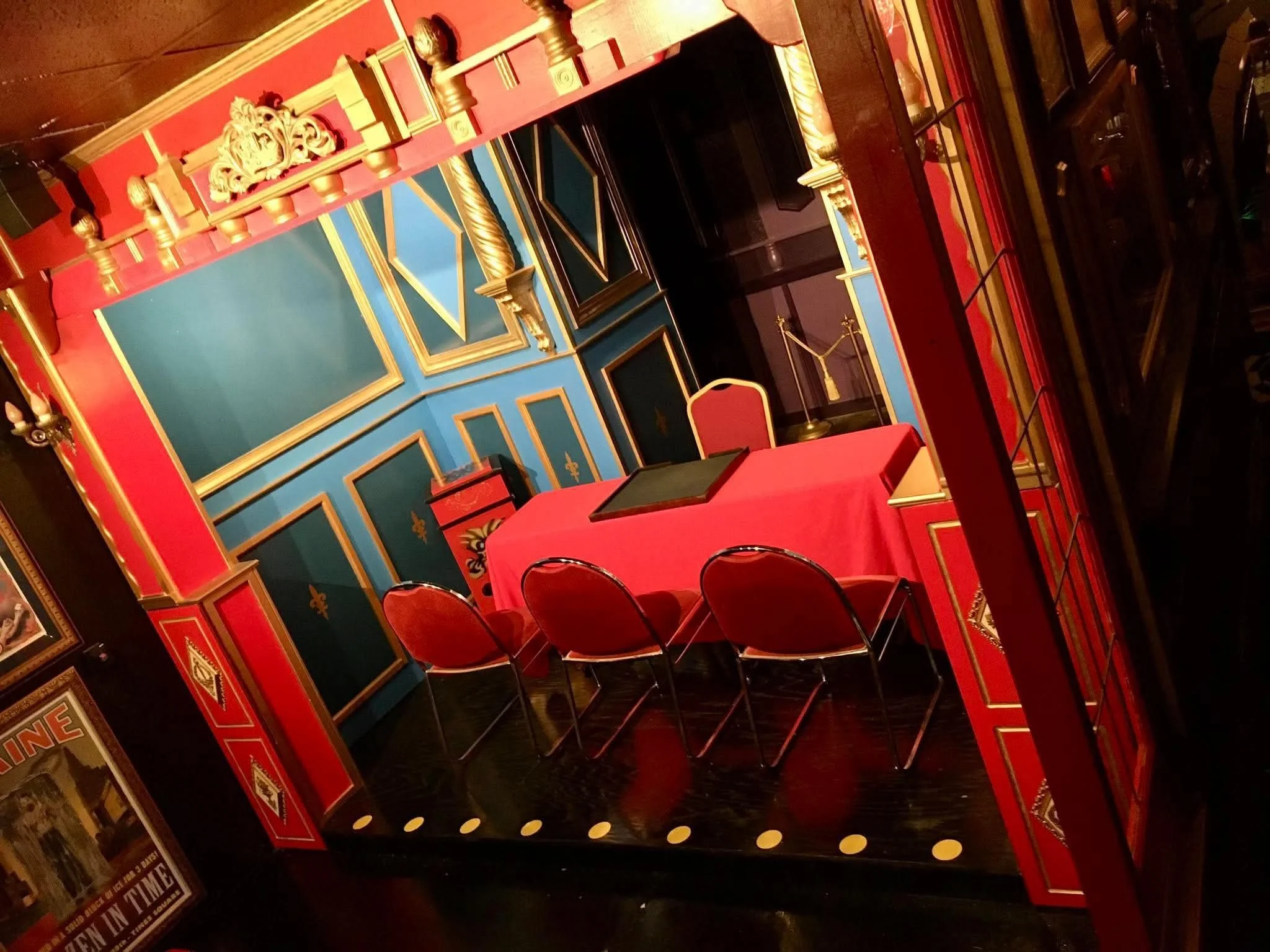
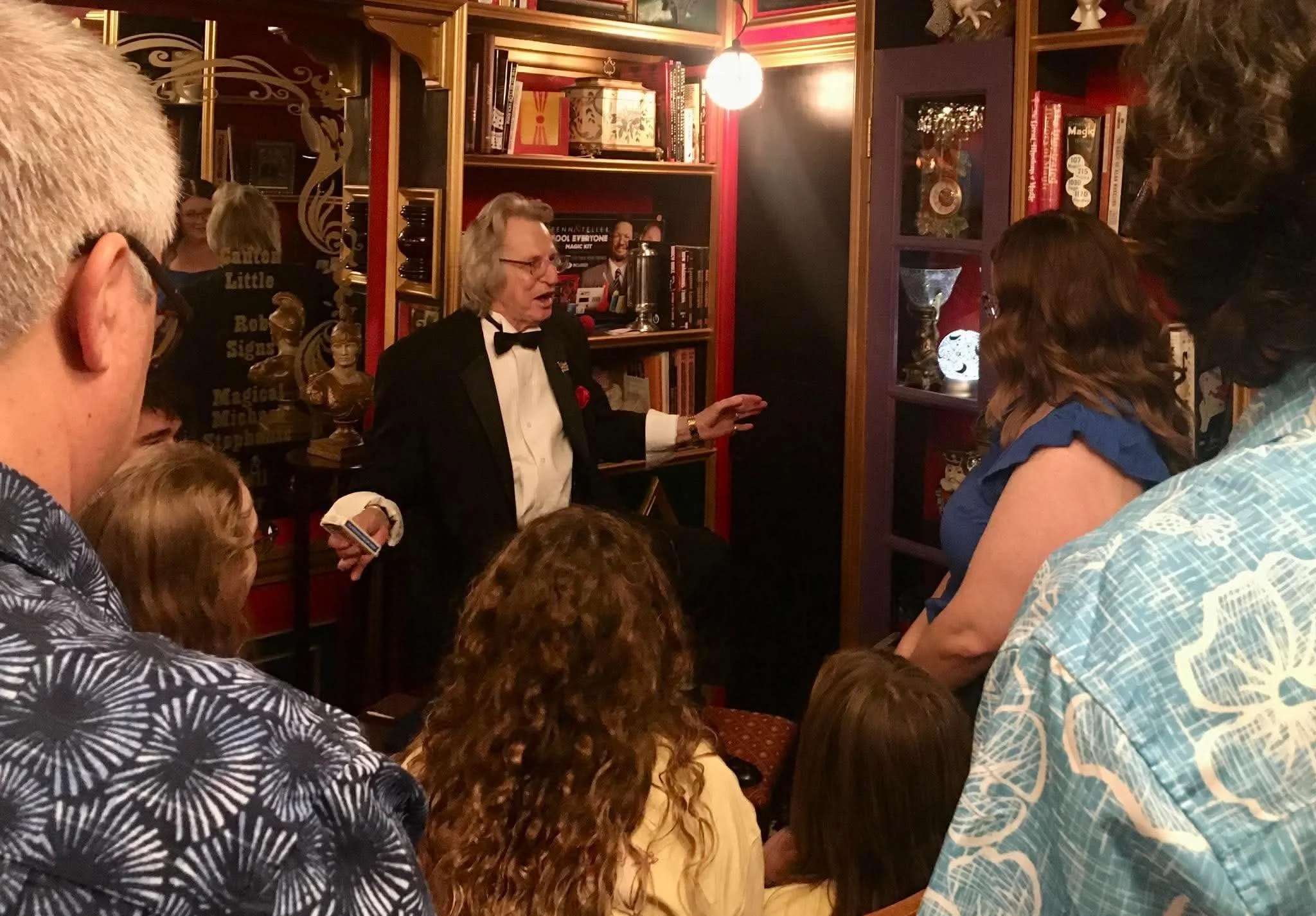
Inside, the surroundings are equally impressive. Rich colors, antique furnishings, intricate artwork, and collectible magic memorabilia fill the rooms. The ceiling of the shop displays playing cards signed by magicians who have visited over the years, while the theater features an elaborate painted ceiling that took a Tulsa artist and her assistant approximately three weeks to complete.
There’s also a Tiffany-style chandelier featuring twelve stained-glass parrots, beautifully restored antique cabinets originally from the Cassidy building in Guthrie, and artwork donated by members of the magic community.
Nearly everywhere you look, something has a story.
What I found especially interesting was how Clark and Marcia approached the decorating process. Not everything came from expensive antique dealers or specialty shops. During our tour, Clark pointed out two impressive decorative columns that were actually old bedposts he'd found in a junkyard. Other details were cleverly repurposed from curtain-rod ends, and the bar was built in Clark's garage before being assembled on-site with help from Tristan, brother of local resident and artist Alysha Little. Alysha also contributed her artistic talents, helping paint and create many of the beautiful decorative details throughout the venue. It's a wonderful example of how a little resourcefulness, creativity, and local talent can transform ordinary materials into something extraordinary.
Other local artists and craftspeople contributed their talents throughout the building, helping turn a collection of individual ideas into a cohesive, imaginative experience.
It’s an impressive example of what can happen when creativity meets resourcefulness. Clark and Marcia didn’t simply purchase an elaborate interior. They collected, restored, repurposed, and created one.
And those antiques they’d spent a decade gathering before they even owned a building? By the time the shop was ready, much of what they needed had already been purchased and prepared.
Clark shared one of his favorite memories from the shop’s opening day. A young visitor stepped inside, stopped, looked around, and exclaimed, “I feel like I’m at a Hollywood movie set!”
For Clark, that reaction was everything. He and Marcia had created exactly the experience they’d envisioned, not in Hollywood, Dallas, or Chicago, but in Locust Grove, Oklahoma.
The Art of Making People Feel Something
Watching a talented magician perform can make the impossible appear effortless. What audiences rarely see, however, is the amount of preparation required to create those few moments of amazement.
Clark told me about a classic magic routine called the cups and balls. From the time he began learning it until he felt ready to perform it for an audience, he spent approximately a year and a half practicing.
Eighteen months of preparation for a routine that might entertain an audience for only a matter of minutes.
And mastering the mechanics is just the beginning. According to Clark, the performer must also develop the timing, humor, storytelling, and audience interaction that transform a trick into entertainment. He compares the process to an actor developing a character, gradually becoming more natural and comfortable through repetition and experience.
When customers enter the shop, he explained, it’s almost as though an imaginary switch flips inside him. Clark the magician comes to life, and the performance begins.
But what struck me most during our conversation was his philosophy about entertaining people. Clark isn’t interested in making someone feel foolish because they couldn’t figure out a trick. His goal is to create a moment of genuine wonder, something that allows people to set aside their worries and simply enjoy themselves.
He told me he can sometimes hear visitors talking as they leave the shop through its thin windowpanes. What he hopes to hear is that they had a wonderful time and never knew such a place existed. Fortunately, he hears those reactions often.
He also recalled a birthday celebration where a comedy magician had two guests laughing so hard that their laughter became contagious, spreading throughout the room. By the end of the evening, people were leaving with aching sides and wonderful memories.
Those moments, Clark explained, are what make the work worthwhile.
As we talked, I couldn’t help thinking about how that philosophy applies to nearly every kind of business. Whether someone is providing a haircut, serving a meal, hosting an event, or entertaining an audience, the actual service is only part of the experience.
The other part is how people feel while they’re there.
And that feeling is often what brings them back.
A Bigger Vision for a Small Town
Although magic is clearly Clark’s passion, our conversation eventually turned toward another subject close to his heart: the future of Locust Grove.
He understood from the beginning that the town’s population alone probably wouldn’t sustain the kind of entertainment venue he wanted to operate. Rather than viewing that as a reason not to move forward, he recognized that his business would need to become a destination.
People would need a reason to make the trip.
Today, The Magic Showplace offers more than a traditional retail experience. Along with magic demonstrations and private performances, Clark and Marcia host special invitation-based Saturday events where guests can enjoy multiple magicians performing throughout the property. With performances in the theater, on the outdoor parlor stage, and inside the shop, visitors can move between different areas and enjoy an afternoon of entertainment.
Upstairs, a private space known as Club 13 pays tribute to the thirteen magicians who helped launch the venue.
Clark recalled one particularly memorable occasion when a man from Oklahoma City, vacationing at Lake Hudson with approximately twenty-two family members, called to arrange a magic performance. The catch? He wanted it that very evening.
Clark made some calls, gathered performers, and helped create a full evening of entertainment for the family. It’s a perfect example of the kind of experience that can bring visitors into a community they might otherwise never explore.
And the couple’s vision continues to grow.
Their next major goal is completing a magic-themed restaurant in the adjoining building. When they purchased the former restaurant, Clark said it looked as though someone had simply walked away and left everything behind. Dishes, stools, and other furnishings remained, almost like a room frozen in time.
The building required substantial repairs, including a roof replacement that cost approximately $28,000. Although work remains and Clark isn’t ready to announce an opening date, the vision is clear: guests could eventually enjoy a meal, browse the magic shop, and attend a live performance, all within one connected destination.
It’s ambitious, but ambition seems to be something Clark and Marcia have never lacked.
And perhaps that’s what makes their story particularly relevant to other small-town entrepreneurs. They aren’t waiting for Locust Grove to become a larger community before creating something unique. They’re creating something unique that gives people a reason to come to Locust Grove.
There’s an important difference.
As our discussion continued, Clark spoke about downtown Broken Arrow and the transformation of its Rose District into an attractive destination filled with businesses, landscaping, and inviting public spaces. He believes Locust Grove has tremendous potential, too, but recognizes that reaching it will require more than individual business owners working independently.
He talked about the importance of shade trees, landscaping, comfortable gathering areas, and public spaces that encourage people to linger rather than simply pass through. Those improvements require planning and resources, but they also require cooperation.
When I asked what he would change about downtown Locust Grove if he could wave his magic wand, his answer wasn’t about increasing traffic to his own business. Instead, he wanted to see city leadership, the Chamber of Commerce, and local businesses working together toward a common goal.
A shared vision, a thoughtful plan, and a commitment to making the community better for everyone.
As Clark put it, “It’s all our town.”
Those words stayed with me because they speak to something I believe is essential for the future of our small communities. We can’t expect one business, one organization, or one individual to create everything we wish existed. At some point, people have to stop waiting for someone else to make things happen and begin contributing to the changes they want to see.
Sometimes that means opening a business others think is unlikely to succeed. Sometimes it’s restoring a forgotten building, creating an event, improving a storefront, or simply supporting someone else’s efforts.
Clark and Marcia could have continued searching for property in Tulsa. They could have decided Locust Grove was too small or that the neglected building required too much work. Instead, they recognized an opportunity and began building something meaningful, one project at a time.
Their story isn’t about overnight success or a perfectly executed plan. It’s about having a vision, making the most of what’s available, and continuing to work toward something even when the finished picture is still years away.
The Best Trick of All
Before I left, Clark offered to show me a little magic. I had appointments waiting back at the barbershop, but after spending our conversation surrounded by antique magic props and hearing stories about his performances, I certainly wasn’t going to leave without seeing at least one trick.
So I sat down, and Clark brought out a deck of cards.
He had me memorize the King of Hearts, placed the card back into the deck, and tucked everything into its case. He explained that he was going to make the King of Hearts disappear, then counted to three.
And just like that, the card was gone.
Actually, the entire deck had vanished.
I stared at him, laughed, and immediately began trying to retrace what he’d done. Clark seemed thoroughly delighted by my reaction.
“Look what you’re doing. You’re laughing big time!”
He was right. For those few moments, I wasn’t thinking about the work waiting for me, the appointments on my schedule, or the countless little responsibilities that tend to occupy our minds throughout the day. I was simply enjoying something unexpected.
And that was exactly what Clark had spent our interview explaining he wanted people to experience.
As I left The Magic Showplace, though, I realized that the disappearing deck of cards wasn’t the most impressive thing I’d seen that day. It was the place itself, and the years of thought, preparation, and hard work that had gone into creating it.
A neglected building transformed into a beautiful theater. A dusty parking lot reimagined as an Enchanted Courtyard. Antiques collected over a decade, waiting patiently for their purpose. A childhood fascination carried through an entirely different career and eventually turned into something remarkable.
And behind it all, a husband and wife who believed they could create an extraordinary experience in a town they initially thought was too small.
Clark May may be the magician, but perhaps the greatest magic he and Marcia have created has nothing to do with sleight of hand. It’s their ability to look at something ordinary, imagine what it could become, and then put in the work necessary to make that vision real.
That’s something worth thinking about, whether you’re starting a business, improving your community, or simply pursuing an idea you’ve been carrying around for years.
We often convince ourselves that we need more money, more resources, a better location, or the perfect circumstances before we can begin. Sometimes those things matter. But sometimes the first step is simply believing something is possible and being willing to start with what we have.
After all, Clark and Marcia didn’t begin with an elaborate theater. They began with a dream and a collection of antiques.
And look what they created.
Maybe the real magic isn’t making something disappear. Maybe it’s seeing the possibilities that everyone else overlooks.
Experience the Magic
The Magic Showplace Theater & Rabbit-in-Hat Magic Shop
211 East Main Street
Locust Grove, Oklahoma
Website:www.magicshowplacetheater.com
Contact The Magic Showplace to learn about magic demonstrations, private performances, special events, and joining the guest invitation list.
And if Clark offers to show you a card trick, take him up on it. Just don’t get too attached to the deck.